

Neck pain treatment for stiffness, strain and pinched nerves
For neck pain that limits turning your head, working at a screen, driving, or sleeping.
Common causes of neck pain
Neck pain can have more than one cause. Your evaluation looks at how your symptoms started, what movements make them better or worse, and whether other areas such as the shoulders, upper back, or arms are involved.
-
Posture & screen work
Long periods at a desk or looking down at a screen can place repeated strain on the muscles and joints around the neck.
-
Muscle strain
Overuse, awkward movement, lifting, exercise, or prolonged positions can leave the muscles around the neck irritated or tight.
-
Joint irritation
The joints in the neck can become painful or restricted, which may affect how comfortably you turn or tilt your head.
-
Disc-related problems
Changes involving the discs in the cervical spine may contribute to neck pain and, in some cases, symptoms that travel toward the shoulder, arm, or hand.
-
Arthritis
Age-related joint changes can contribute to stiffness, reduced movement, and discomfort.
-
Whiplash
A sudden force, such as during a car accident, can strain the muscles, joints, and other structures around the neck.
Learn about personal injury care
Symptoms we evaluate
Neck pain can show up in different ways
We evaluate concerns such as:
- Neck stiffness or reduced range of motion
- Pain when turning or tilting the head
- Headaches that begin around the neck
- Pain extending into the shoulder or arm
- Tingling or altered sensation in the hands
If headaches are a major part of what you are experiencing, your evaluation may also help determine whether the neck could be contributing.

When to see a doctor first
Some neck symptoms need medical attention first
Seek medical evaluation promptly if your neck pain is associated with:
- A major fall or crash
- Neck stiffness with fever and headache
- A sudden severe headache
- New weakness
- Loss of balance or coordination
- Trouble swallowing or speaking
These symptoms may require medical assessment before chiropractic or mobility care is considered.

How we evaluate neck pain
Your evaluation starts with the bigger picture
The goal is to understand not only where the neck hurts, but how the problem is affecting movement and daily life.
Your visit may include discussion of:
- When your symptoms started
- What makes them better or worse
- Previous injuries or accidents
- Workstation and daily activity
- Sleep and movement limitations
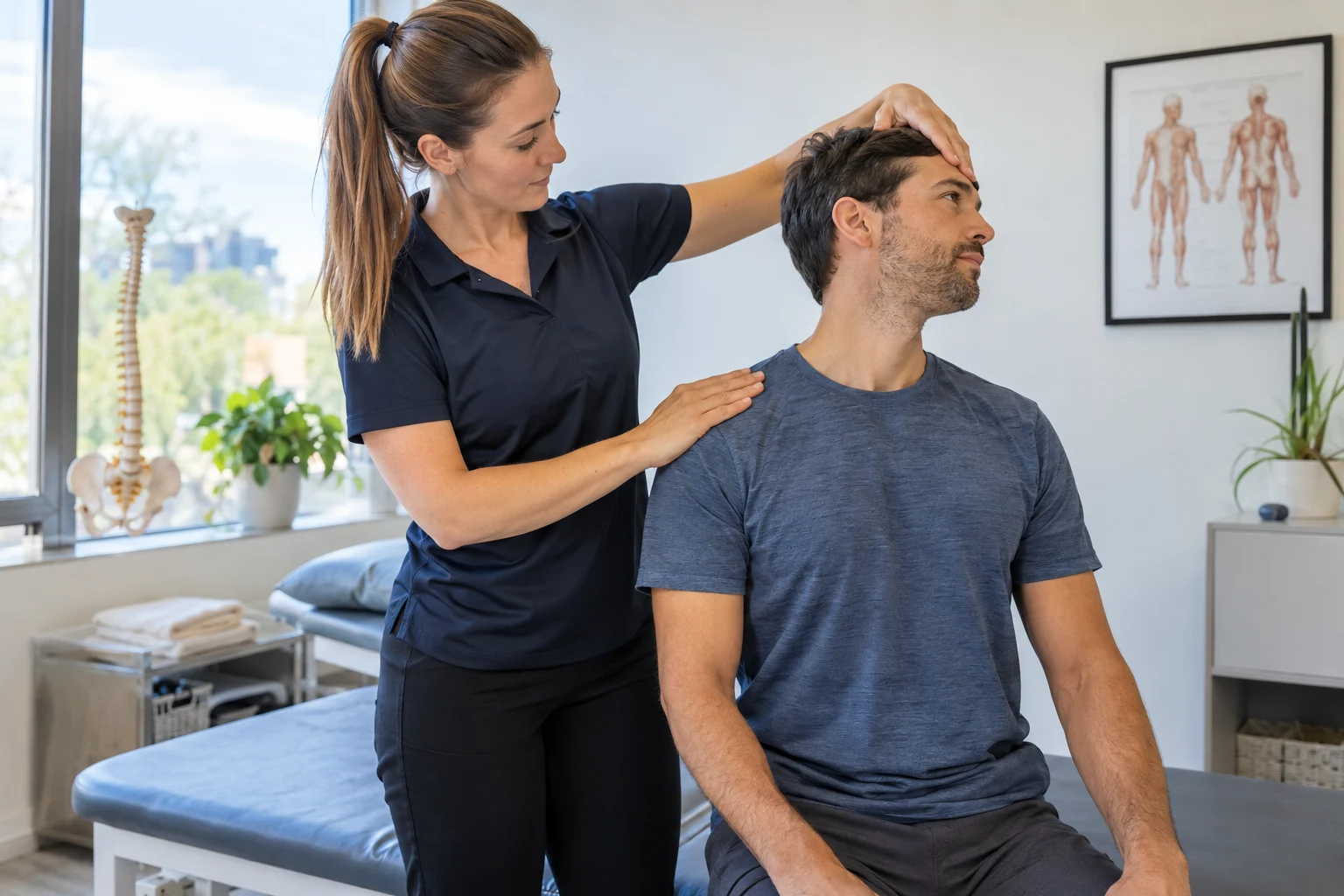
The clinician may also assess neck movement, posture, strength, and other areas relevant to your symptoms.
If the findings suggest that imaging, medical evaluation, or another type of care is needed, that can become part of the next step.
Treatment options
Your plan depends on what we find
Not every patient with neck pain needs the same treatment. Depending on your evaluation, care may include one or more of the following.
-
Adjustments & mobilization
Hands-on care may be used to address joint movement and stiffness where appropriate.
-
Cervical decompression
Controlled spinal decompression may be considered for certain disc-related or nerve-related neck concerns.
-
Laser therapy
Laser therapy may be used alongside other care for certain joint, muscle, tendon, or nerve-related concerns.
-
Rehabilitation & posture work
Guided movement can help address mobility, strength, posture, and the activities that are difficult because of your symptoms.
-
Home plan
Your care may also include exercises, movement breaks, workstation changes, or other guidance for the time between appointments.
What progress can look like
Progress is different for every patient
How neck pain responds depends on the cause of the problem, how long symptoms have been present, the activities involved, and your individual health history.
Rather than promising a fixed timeline, progress can be reviewed through changes such as:
- How comfortably you can turn your head
- Whether daily activities are becoming easier
- Changes in stiffness or symptoms
- Your ability to work, drive, sleep, or exercise
- Changes in strength or mobility where relevant
Your care plan can be adjusted as these findings change.

Neck pain tips for home and work
-
Set up your workstation
Keep the screen at a comfortable viewing height and position frequently used items where you do not need to repeatedly twist or reach.
-
Change positions regularly
Avoid staying in one position for long periods. Short movement breaks can help reduce prolonged strain.
-
Pay attention to sleep position
A comfortable sleeping position should allow your head and neck to feel supported rather than forced into an awkward angle.
-
Follow your prescribed home plan
If your clinician gives you specific exercises or mobility work, follow those instructions rather than relying on generic stretches that may not fit your situation.
FAQ
Neck pain FAQs
Whether an adjustment is appropriate depends on your history, symptoms, and evaluation. Chiropractic care can include different techniques, and not every patient needs the same approach.
A recent strain often settles faster than pain that has built up over months or involves a disc. Your clinician rechecks movement and symptoms at your progress reviews and adjusts the plan.
Yes, some headaches start in the neck and spread to the back of the head or behind the eyes. Your evaluation checks whether neck movement changes your headache. The Headaches & migraines page explains more.
Usually on your back or side, with a pillow that keeps your head level with your spine. Sleeping on your stomach turns the neck for hours and often makes pain worse. Your clinician can suggest changes for your situation.
Get medical care promptly if neck pain follows a fall or crash, or comes with fever and headache, a sudden severe headache, new weakness, loss of balance, or trouble swallowing or speaking. For anything sudden and severe, call 911.
Still have more questions? Send us a message

Book a meeting
Start with a neck pain evaluation
If neck pain is making it harder to work, drive, sleep, exercise, or move comfortably, start with an evaluation. The care team can assess what you are experiencing and discuss which next steps may fit your findings and goals.
- (346) 446-4990
- [email protected]
- 2500 West Loop S, Suite 150
Houston, TX 77027 - Mon - Fri: 9AM - 5PMSat - Sun: Closed