Shoulder pain treatment in Houston
Care for shoulder pain or stiffness that makes lifting, reaching, sleeping, training, or everyday movement more difficult.
Who this program is for
Is shoulder pain limiting how you move, sleep, or train?
This program is designed for people dealing with shoulder pain, stiffness, weakness, or movement limitations that make everyday activities harder.
You may be a good candidate for an evaluation if you experience:
- Pain when reaching overhead
- Pain reaching behind your back
- Pain when lying on the affected shoulder
- Weakness when lifting
- A stiff shoulder
- Clicking or catching
- Difficulty training or exercising
- Ongoing limitations after shoulder surgery
The goal of the evaluation is to understand what may be contributing to your symptoms and determine whether this program is an appropriate next step.

What your evaluation covers
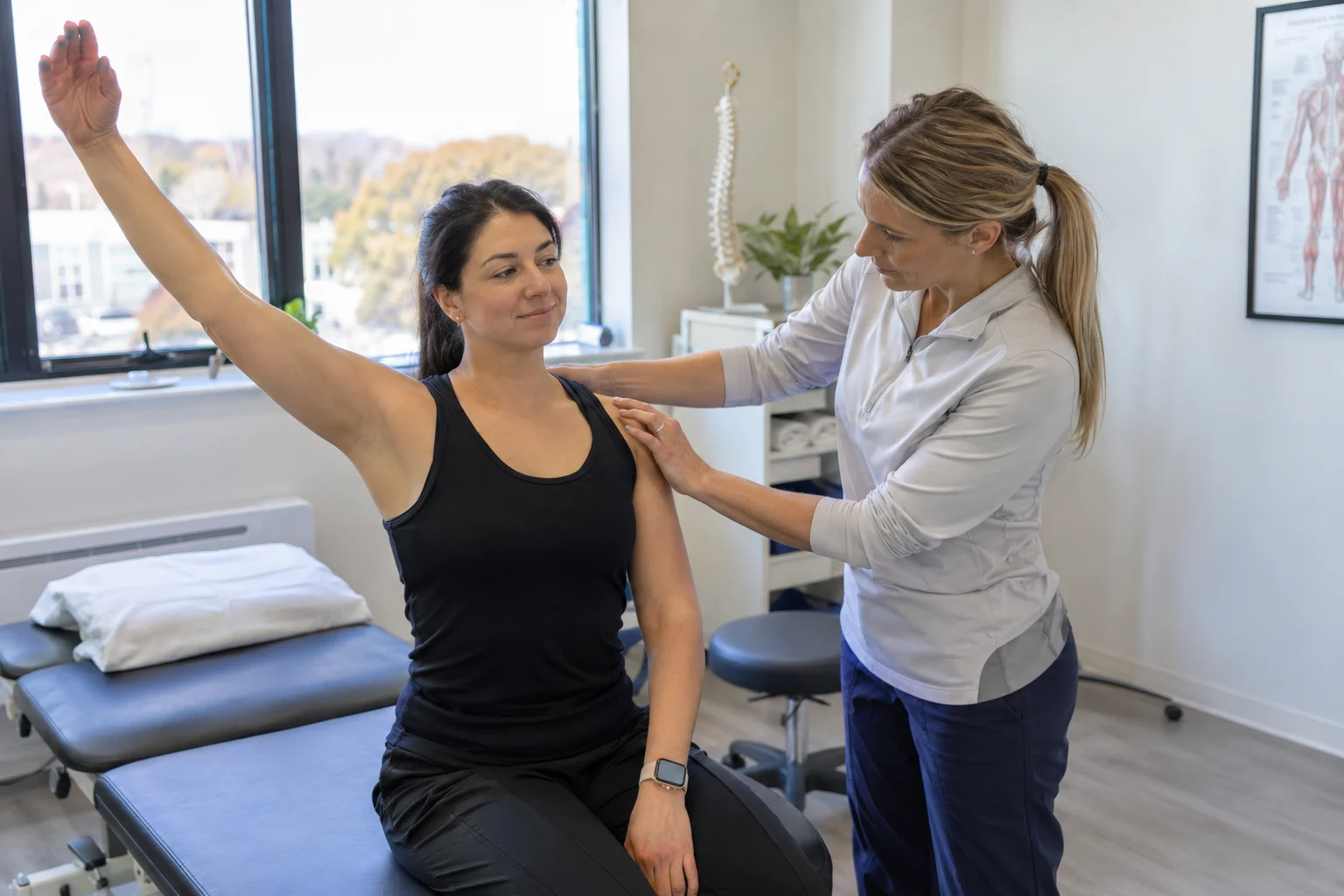
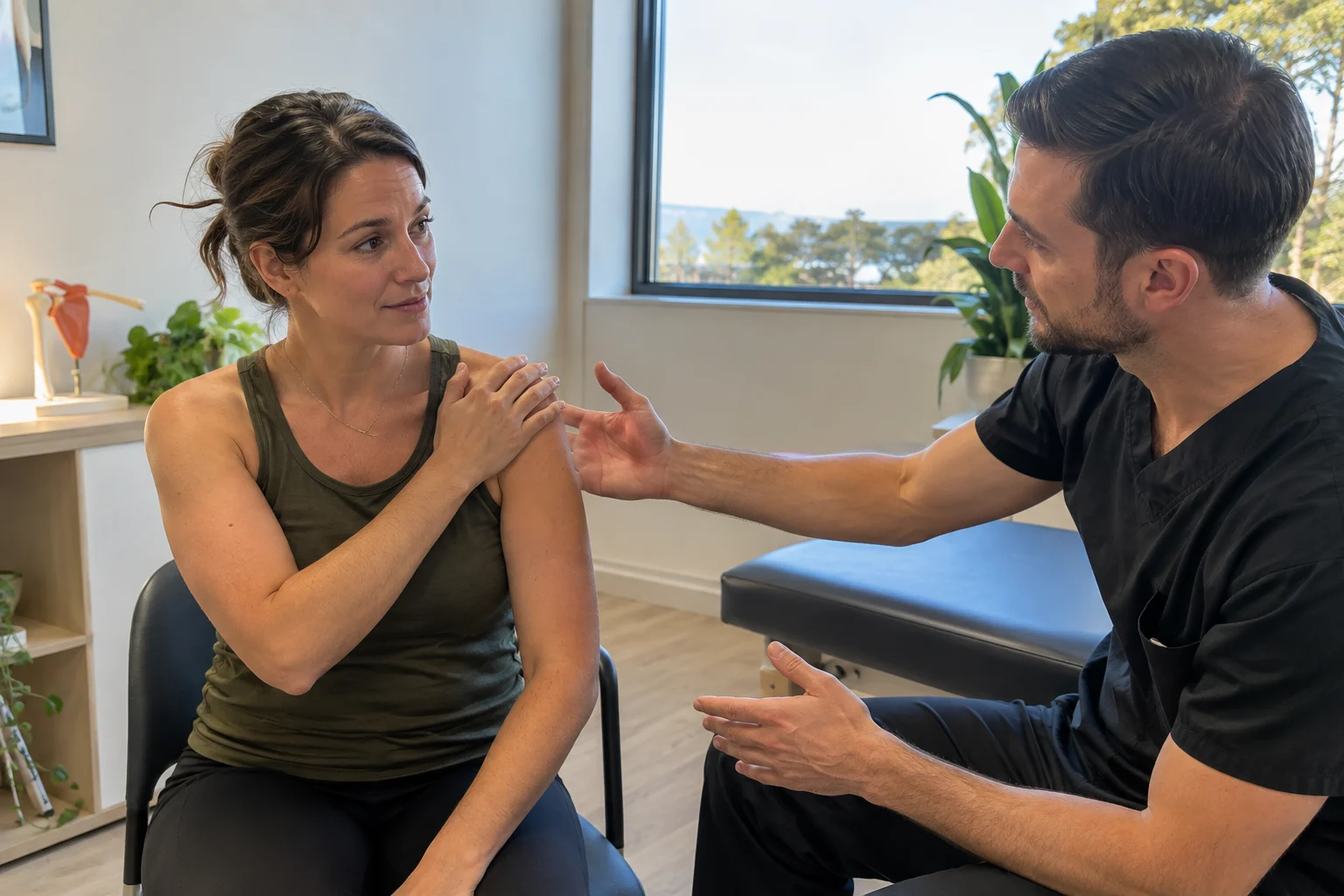
Shoulder pain does not always start in the shoulder itself. Your evaluation may include the neck and upper back as well as the shoulder so the clinician can better understand what is affecting your movement.
-
Shoulder movement
Reviewing how comfortably the shoulder moves through different directions and activities.
-
Neck screening
Checking whether neck-related issues may be contributing to shoulder or arm symptoms.
-
Upper-back movement
Looking at how the upper back moves and supports shoulder function.
-
Strength
Assessing the muscles around the shoulder and upper body.
-
Range of motion
Measuring how far and how comfortably the shoulder can move.
-
Imaging review
Reviewing existing imaging when relevant to your symptoms and history.
What the program includes
Care in the clinic, support at home, and regular progress reviews.
-
In the clinic
Your care may include:
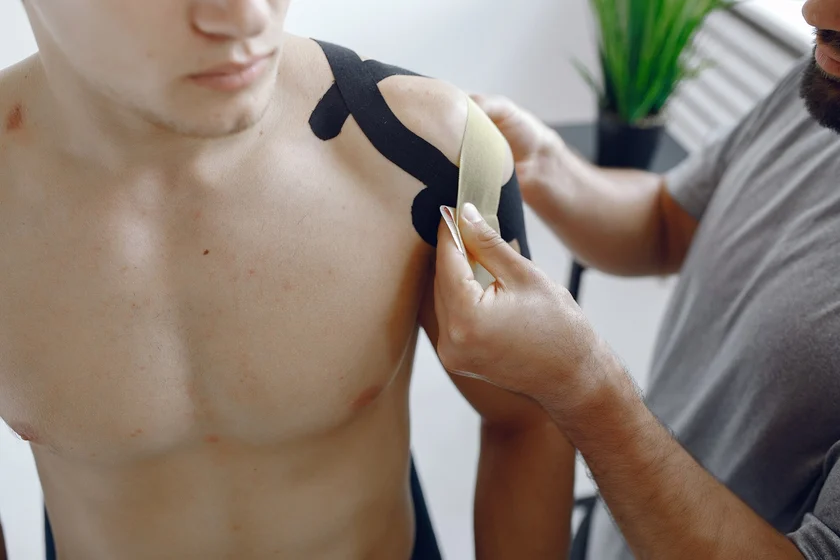
- Shockwave therapy for tendon-related pain where appropriate
- Laser therapy
- Shoulder and upper-back adjustments or mobilization
- Rehabilitation and mobility work
Not every treatment is used for every patient. The combination depends on your assessment and clinical needs.
-
Between visits
Your care plan may include a simple home routine designed to support the work you are doing in the clinic. This may include:
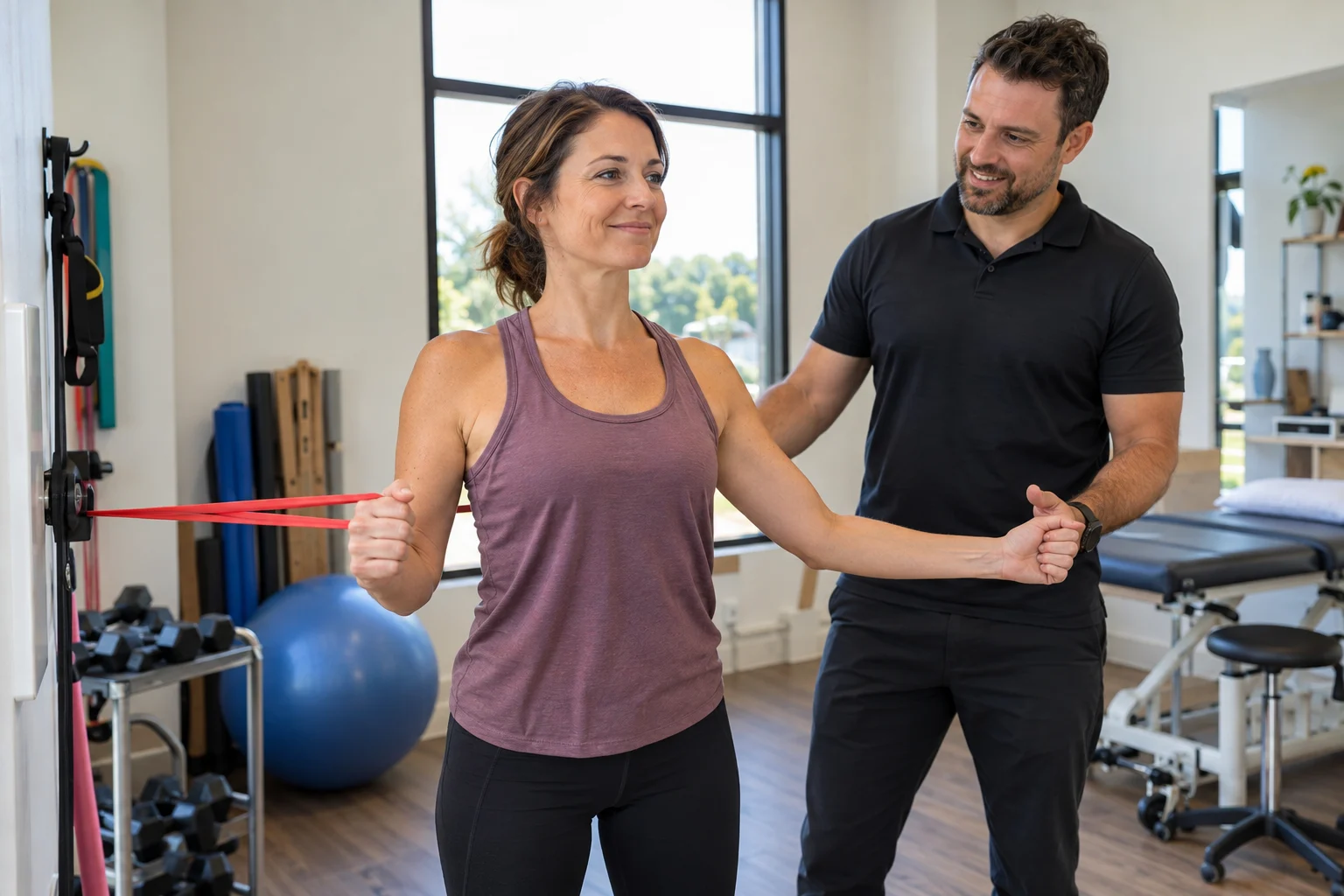
- Guided shoulder exercises
- Mobility work
- Strengthening exercises
- Home light-based support where appropriate
- Clear instructions for what to do between visits
-
Progress reviews
Your clinician can periodically reassess how your shoulder is moving and how well you are returning to the activities that matter to you. Progress may be reviewed through:
- Range of motion
- Strength
- Reaching overhead
- Reaching behind the back
- Comfort during sleep
- Ability to return to exercise or training
Shoulder conditions we see
Shoulder concerns this program may support
-
Rotator cuff tendon pain
Pain or weakness around the shoulder may become more noticeable during lifting, reaching, or repeated overhead activity.
-
Calcific tendon pain
Calcium deposits within a shoulder tendon may contribute to pain, stiffness, or difficulty moving the arm.
-
Bursitis
Irritation around the shoulder joint may contribute to discomfort with movement or lying on the affected side.
-
Shoulder impingement
Some shoulder movements can become painful when tissues around the joint are irritated or compressed.
-
Frozen shoulder
Progressive stiffness can make reaching, dressing, sleeping, and everyday movement more difficult.
-
Rehabilitation after surgery
Once medically appropriate, rehabilitation may focus on restoring movement, strength, and confidence after shoulder surgery.
What progress can look like
Shoulder recovery can look different from one person to another. Rather than focusing on one fixed timeline, progress can be tracked through meaningful changes in movement and function.
Depending on your starting point, this may include:
- Reaching higher or more comfortably
- Improved range of motion
- Better strength and control
- Less difficulty dressing or reaching behind your back
- More comfortable sleep
- Greater confidence lifting
- Gradual return to exercise or training
Your plan can be adjusted based on how you respond to care.
When to see a doctor first
Seek appropriate medical evaluation before starting this program if:
- You develop sudden weakness after a fall
- You cannot lift your arm
- There is a visible deformity
- You have left shoulder or arm pain with chest pain or shortness of breath
For chest pain or shortness of breath, seek emergency medical care.
FAQ
Shoulder restoration FAQs
Yes, shoulder or arm symptoms can sometimes be influenced by the neck. That is why the evaluation includes screening of the shoulder, neck, and upper back.
Yes. Frozen shoulder usually improves slowly, so care focuses on keeping and regaining movement with mobilization, guided exercise and a home routine, adjusted to how stiff and painful the shoulder is at each stage.
It may be, for rotator cuff tendon pain and calcific tendon pain. Your evaluation decides whether shockwave fits your shoulder, and it is used alongside exercise and other care.
Your clinician sets clear steps for returning to lifting and training. You move to the next step when your strength and range of motion are ready for it.
Not usually. The clinician reviews any imaging you already have and will refer you for imaging if your findings call for it, for example after a fall or with sudden weakness.
Yes, once your surgeon says rehabilitation can begin. Bring your surgical notes and any protocol from your surgeon, and care will follow those limits while rebuilding movement and strength.
Still have more questions? Send us a message

Book a meeting
Start with a shoulder evaluation.
If shoulder pain or stiffness is making lifting, reaching, sleeping, or training more difficult, the first step is understanding what may be contributing to the problem. Book an evaluation so the team can assess your shoulder movement, strength, range of motion, and related areas and determine an appropriate path forward.
- (346) 446-4990
- [email protected]
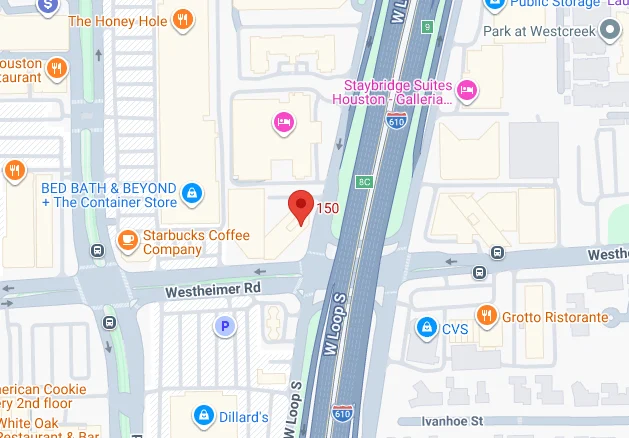
- 2500 West Loop S, Suite 150
Houston, TX 77027 - Mon - Fri: 9AM - 5PMSat - Sun: Closed