
How our care works
We start by understanding what you’re feeling, what it’s affecting, and what you want to get back to. From there, your care plan is built around your needs, your movement, and how you respond over time.
Start with what is getting in the way of daily life
Pain is only part of the picture.
We want to understand what your symptoms are stopping you from doing, whether that means working comfortably, sleeping better, walking with confidence, getting back to training, or simply moving through the day with fewer limitations.
Your evaluation gives the care team a clearer picture of your symptoms, movement, health history, and goals.
Instead of starting with a preset treatment, the plan is built around what is most relevant to you.


Your care journey
A clear path from understanding to progress
-
Identify
Your first step is an evaluation. The care team reviews your symptoms, health history, movement, and any relevant medical information to understand what may be contributing to the problem and what needs further attention.
-
Plan
Once the evaluation is complete, the care team can explain what they found and recommend an appropriate plan.
That plan may include one or more in-clinic treatments, rehabilitation or mobility work, and support for the days between visits. -
Measure
Progress is reviewed over time rather than assuming that the original plan should stay the same.
Your care team may repeat relevant movement tests, strength measures, symptom checks, or other parts of your evaluation to see what is changing. -
Support
As your needs change, your plan can change with them.
That may mean progressing exercises, changing treatment frequency, shifting the focus of care, or giving you more responsibility for what happens between visits.
In the clinic and between visits
What happens between visits can be an important part of your overall plan. Depending on your needs, you may receive:
Guided exercises
Movements selected around strength, mobility, balance, or function.
Home-based support
Some programs may include a prescribed home device or other between-visit support.
Practical guidance
Your plan may include recommendations around movement, activity, workstation setup, nutrition, or other habits where relevant.
Clear instructions
You should understand what to do between appointments, how often to do it, and when something needs to be adjusted.

How we measure progress
Your care plan should change based on how you are responding.
Depending on what you are being treated for, progress reviews may include:
- Changes in symptoms
- Range of motion
- Strength
- Balance
- Walking or movement patterns
- Ability to perform specific activities
- Repeat orthopedic or neurological screening where appropriate
Re-exams help the care team determine whether to continue, progress, modify, or redirect the plan.
If you are not responding as expected, that may also be a reason to consider further imaging, medical referral, or a different approach.

The technology we use
Technology may be included when it fits the findings from your evaluation and the goals of your care.
-
Spinal decompression
Controlled traction that may be considered for certain disc-related or spine-related concerns.
-
Shockwave therapy
Acoustic pressure-wave treatment that may be used for certain tendon, heel, joint, and soft-tissue concerns.
-
Laser therapy
Light-based treatment that may be used alongside care for certain joint, muscle, tendon, nerve-related, or post-injury concerns.
Working with your doctors
Chiropractic and mobility care does not replace the need for medical evaluation when another type of care is more appropriate.
Depending on your situation, the care team may:
- Review existing imaging or medical records
- Recommend additional imaging
- Refer you to a physician or another healthcare professional
- Coordinate care when you are already working with a doctor
- Continue supporting movement and recovery alongside medical treatment
If your symptoms fall outside the clinic’s scope, the appropriate next step may be referral rather than treatment in the clinic.

Meet the team
The people behind your care


Book a meeting
Start with an evaluation.
You do not need to know what treatment you need before your first appointment. Start by telling the care team what you are feeling, what it is affecting, and what you want to get back to. From there, they can evaluate what is going on and discuss the next step.
- (346) 446-4990
- [email protected]
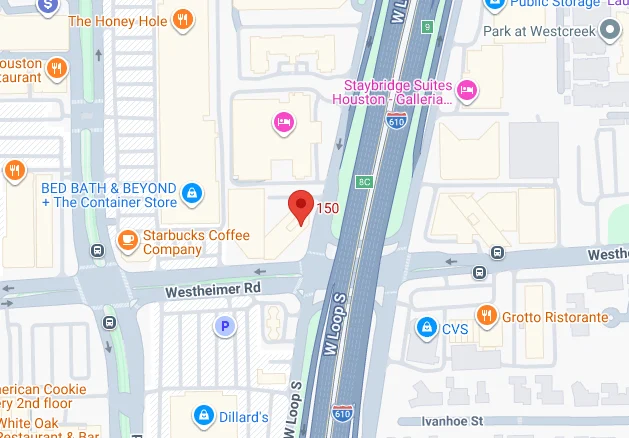
- 2500 West Loop S, Suite 150
Houston, TX 77027 - Mon - Fri: 9AM - 5PMSat - Sun: Closed