
Non-surgical sciatica treatment for back and leg pain
For pain, numbness, or tingling that travels from the lower back or buttock down the leg.
What sciatica is
Sciatica is more than lower back pain
Sciatica describes pain or other symptoms that travel along the path of the sciatic nerve, often beginning in the lower back or buttock and extending into the leg.
Some people mainly feel pain. Others notice numbness, tingling, or weakness.
Because similar symptoms can come from different causes, the first step is understanding where the irritation may be coming from and how it is affecting your movement.

What can contribute to sciatica?
-
Herniated disc
A disc in the lower spine can irritate or place pressure on nearby nerve structures, contributing to pain or symptoms that travel into the leg.
-
Narrowing of the spinal canal
Changes that reduce space around the nerves in the lower spine may contribute to pain, numbness, or tingling.
-
Piriformis tension
The sciatic nerve passes close to the piriformis muscle in the buttock. Tension or irritation in this area may contribute to sciatic-type symptoms.
-
SI joint problems
Irritation around the sacroiliac joint can sometimes create pain patterns that overlap with symptoms commonly associated with sciatica.
Symptoms
What sciatica can feel like
Symptoms can vary depending on where the irritation is coming from and which structures are involved.
We evaluate concerns such as:
- Pain beginning in the lower back or buttock
- Pain traveling down one leg
- Numbness or tingling
- Burning or electric-like sensations
- Weakness in the leg or foot
- Symptoms that change with sitting, standing, walking, or certain movements
The pattern of your symptoms can help guide the evaluation and determine what type of care may be appropriate.

When sciatica is an emergency
Some symptoms need urgent medical attention
Seek urgent medical evaluation if sciatica appears with:
- New changes in bladder or bowel control
- Numbness around the groin or inner thighs
- Weakness that is getting progressively worse
These symptoms can indicate a condition that requires immediate medical assessment rather than routine conservative care.

How we evaluate sciatica
Finding out where the symptoms are coming from
Your evaluation starts with understanding how the symptoms began, where they travel, what affects them, and what they are limiting.
The care team may review:
- Your lower back and leg symptoms
- When the pain, numbness, or tingling started
- What positions or movements make symptoms better or worse
- Previous injuries or spine concerns
- Strength, mobility, and movement patterns
The clinician may also assess the lower back, hips, legs, and nerve-related findings relevant to your symptoms.
If your findings suggest that imaging or medical referral is needed, that can be discussed before treatment begins.

Treatment options
Your treatment plan depends on the cause
Sciatica is a symptom pattern, so care should be based on what appears to be contributing to it.
-
Spinal decompression
Controlled spinal decompression may be considered when disc-related or other spine-related findings are contributing to symptoms.
-
Chiropractic care
Adjustments or mobilization may be used where appropriate as part of the broader care plan.
-
Laser therapy
Laser therapy may be incorporated alongside other care when appropriate for the findings and treatment goals.
-
Rehabilitation
Guided rehabilitation and mobility work can help address movement, strength, and function.
-
Home plan
Your care may also include exercises, activity guidance, or other instructions for the days between visits.
Sciatica or neuropathy?
They can feel similar, but they are not the same thing
Sciatica usually describes symptoms that follow the sciatic nerve pathway, often beginning around the lower back or buttock and extending into the leg.
Neuropathy can also cause numbness, tingling, burning, or altered sensation, but the pattern and underlying causes may be different.
If your symptoms do not clearly follow a sciatic pattern, or if numbness and tingling affect both feet or multiple areas, the evaluation may need to consider other nerve-related concerns.

FAQ
Sciatica FAQs
There is no single timeline. How long symptoms last depends on what is causing them, how long they have been present, and how you respond to care.
For most people, gentle activity within what you can tolerate is better than bed rest. Short walks and changing position often help, while long sitting and heavy lifting often aggravate it. Your clinician can tell you which activities to keep and which to ease off.
Chiropractic care may be part of the plan when the evaluation points to the lower back, pelvis or hip as the source. It is usually combined with exercise and, where appropriate, decompression or laser therapy. If the findings point elsewhere, the clinician refers you.
It may be when a herniated or bulging disc is contributing. It is not suitable for everyone, for example after recent spinal surgery or with severe osteoporosis. Your evaluation and any imaging decide.
Sciatica usually runs from the lower back or buttock down one leg along the sciatic nerve. Neuropathy more often affects both feet or the hands and has different causes, such as diabetes or certain medications. Your evaluation looks at the pattern to tell them apart.
Get urgent medical care if sciatica comes with new changes in bladder or bowel control, numbness around the groin or inner thighs, or leg weakness that keeps getting worse.
Still have more questions? Send us a message

Book a meeting
Start with a sciatica evaluation
If pain, numbness, or tingling is traveling from your lower back or buttock into the leg, start with an evaluation. The care team can assess your symptoms, look at how you move, and discuss the next step based on what they find.
- (346) 446-4990
- [email protected]
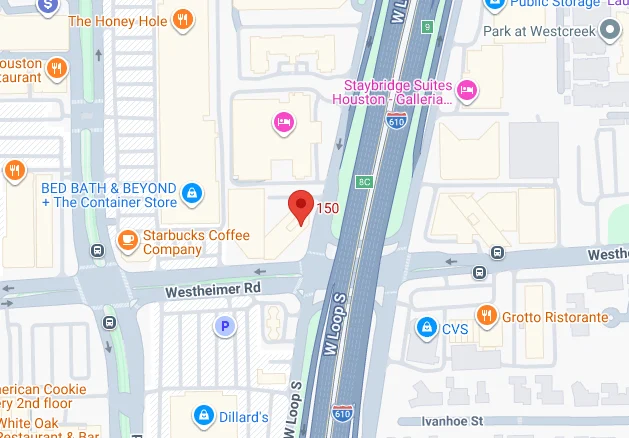
- 2500 West Loop S, Suite 150
Houston, TX 77027 - Mon - Fri: 9AM - 5PMSat - Sun: Closed